ESAF Foundation Communications
7 June 2025
FEATURE
Training, Trade and Tenacity Are Remaking a Rural Economy
ESAF Foundation Communications
7 June 2025
This feature explores ESAF Foundation’s integrated rural development model in Dumka, where bamboo craft, skill training, and community enterprise come together. It shows how local solutions can unlock lasting economic and social transformation in rural India.
A bamboo mat, woven by a mother’s hands. A rural road and public bus carry her to a distant market. A payment arrives by phone. It buys her daughter’s schoolbag and books. The classroom unlocks her voice. At dusk, a solar panel lights her desk. And a future, once out of reach, begins to take shape.
In this weave, development stops being transactional. This is the promise of integrated rural development: progress that recognises the whole person, the whole household, and the full potential of place.
India’s future breathes through its villages, where nearly two-thirds of its people still live. But what weighs on rural India is not just poverty. It is the collision of many poverties.
A child who skips school may also drink from an unsafe well. A woman who weaves baskets may have no market. A farmer who grows millet may live off a single meal.
Health, education, income, ecology, and equity—they falter together. And they must rise together.
The Government of India has recognised this interdependence and embedded it into national rural frameworks. But in a country this vast, policies go only so far. What brings them to life are grounded institutions, especially civil society organisations that understand not just the challenges, but the people behind them.
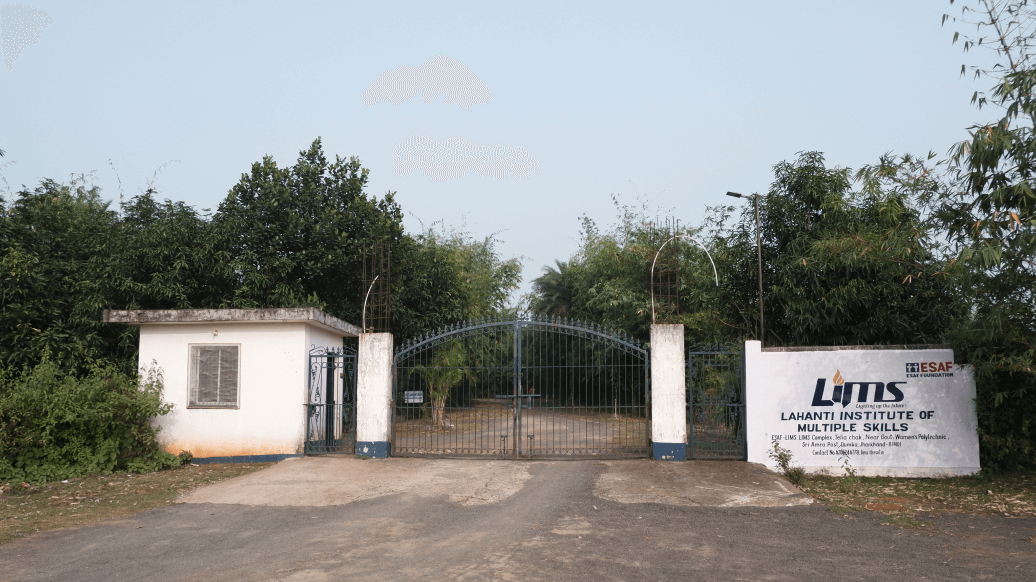
That is why, in 2015, ESAF Foundation opened the Lahanti Institute of Multiple Skills (LIMS) in Dumka, Jharkhand. Not a scheme, not a centre, but a living ecosystem where the threads of craft, community, and commerce are woven into a pattern of progress.
TNG1
From Forest to Future: Craft as Catalyst
The day begins with dew underfoot and silence in the trees. Lakhiram walks barefoot along a leaf-strewn trail, the red soil of Dumka still damp from the night. Above him, columns of Dendrocalamus strictus—straight, green, whispering—rise like forest spires. He pauses, presses his palm to a stalk, knocks twice. Hollow. Too young. He moves on.
The right bamboo, he says, bends but does not break. It must soften over flame and hold the shape of its new life.
He finds one. Tall, with a blush at the joints. A clean diagonal cut at the node. The forest gives, but never empties. Another shoot will rise. Bamboo renews itself. So too, it seems, does the community.
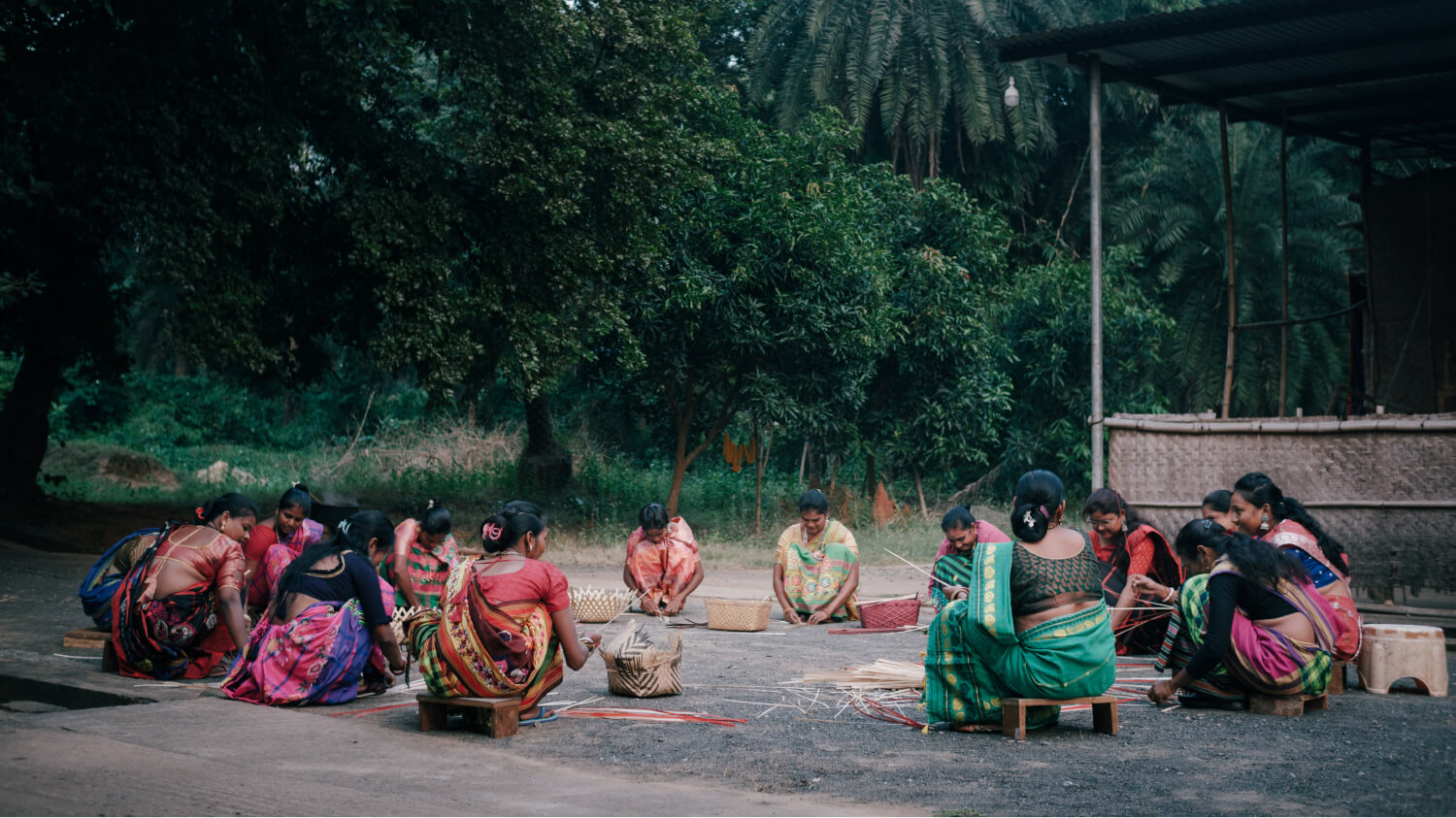
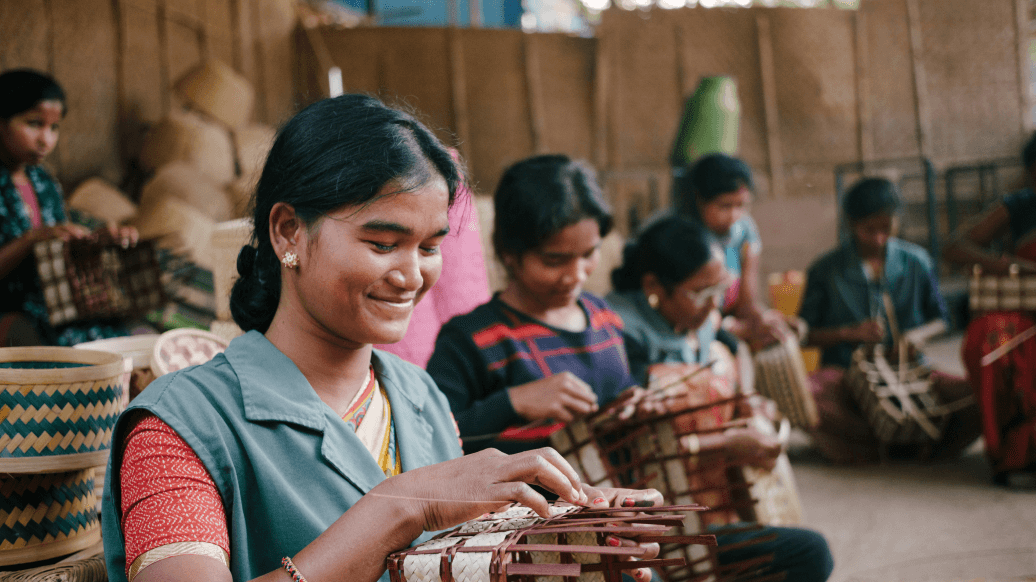
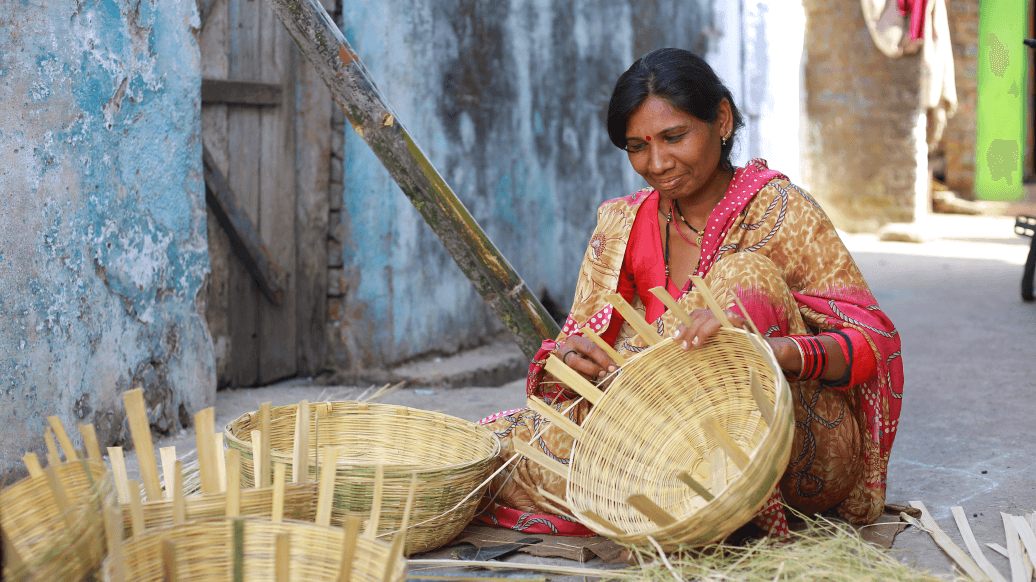
By noon, he returns to Lakhanpur with a bundle: thick stalks for furniture, fine ones for rims, pliable strips for trays and mats. The women are ready. In doorways and under shade, they sit with blades and steady hands. They split, shape, and weave what he has brought. Into baskets. Into income. Into a little more stability than yesterday.
These crafts, passed through generations of the Mohli tribe, once lived quietly. Beautiful, but underpriced. Functional, but unseen. The world looked away.
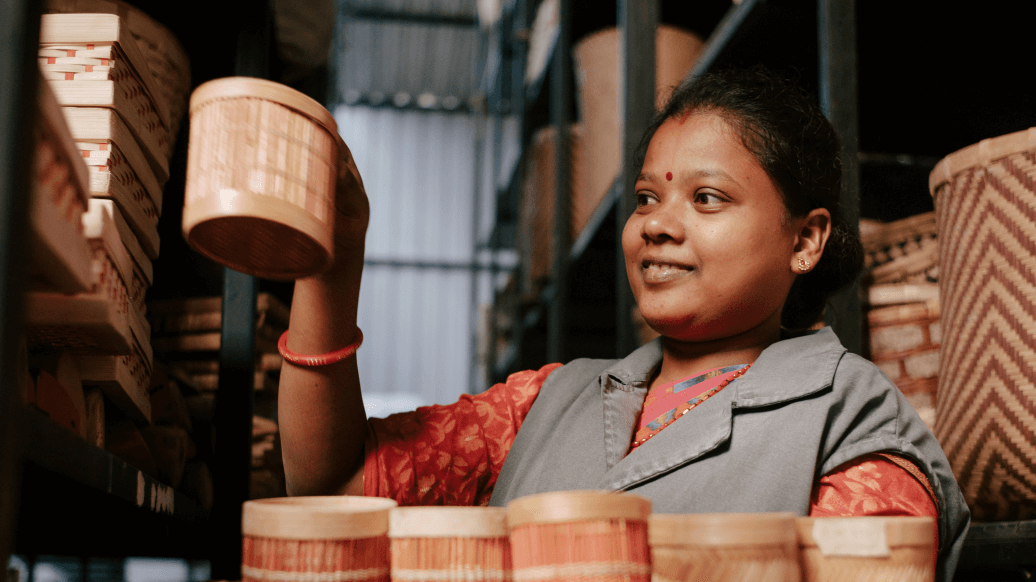
Lakhiram’s harvests no longer vanish into anonymous supply chains. They become lampshades, bamboo rugs, and modular eco-products that carry the memory of forest into urban homes.
TNG2
In Lakhanpur’s 22 households, craft is now currency. Festival seasons bring surging orders. But in the gaps between them, it is LIMS that anchors livelihoods. Women learn branding and pricing strategy. Men learn sustainable harvesting and design. Bamboo, fast-growing and resilient, proves future-ready.
The model has travelled. In Bokaro, ESAF Foundation partnered with SAIL to open a craft-based training centre, guided by artisans once trained in Dumka—now teachers in their own right. Back home, women who once whispered in meetings now lead WhatsApp training groups, discussing price margins and market logistics with the fluency of seasoned entrepreneurs.
The impact is not just anecdotal. It is measurable. Over 9,500 youth and artisans trained. More than 70% are self-employed. Two Common Facility Centres built. Over 16,000 bamboo artisans are upskilled, with 8,500 gaining direct market linkages.
But it is the stories that linger: a girl’s school fees paid from a single lampstand. A ₹10 basket is now sold for ₹50. A village that once whispered of migration now speaks of enterprise.
TNG3
Beyond Bamboo: A Tapestry of Livelihoods
Bamboo may be Dumka’s most visible thread of revival, but it is far from the only one. At LIMS, integration means not just depth, but range. From textiles to tulsi, baking to banking, the campus hums with a choreography of skills—each strand reinforcing the next.
Recognised as a Centre of Excellence and aligned with NSDC and Sido Kanhu Murmu University, LIMS connects learning with livelihood, culture with commerce, and education with equity.
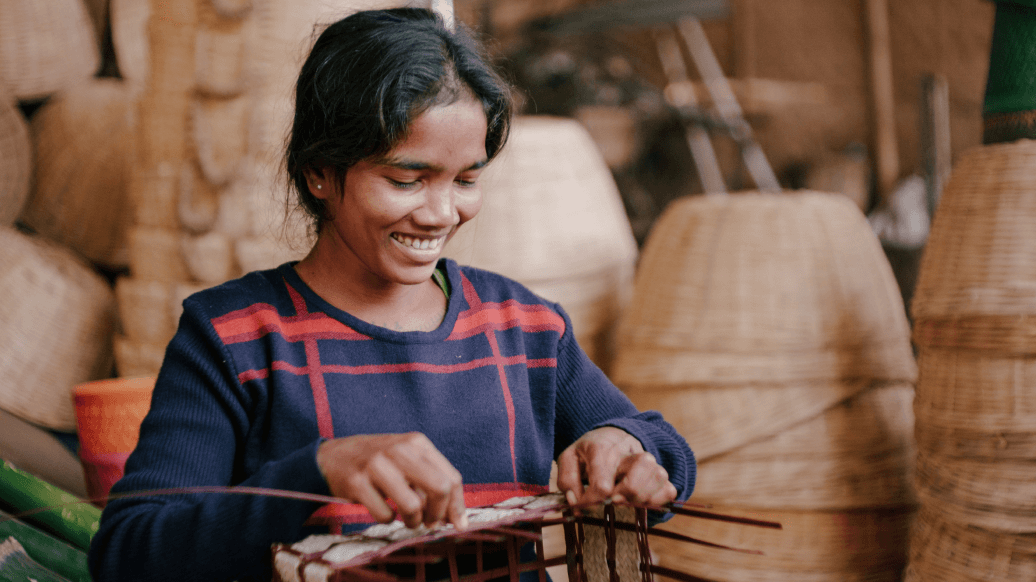
In one room, school dropouts master screen printing, not just as a craft, but as a business—designing for local schools and NGOs. In another, teenage girls stitch uniforms and blouses, dreaming of setting up their own tailoring unit.
Follow the scent of spice, and you reach the food processing unit, where young women learn to make and package snacks with shelf appeal and market potential. Nearby, farmers tend to trays of tulsi, aloe, and lemongrass—learning structured agribusiness, guided step-by-step from organic methods to branding for wellness markets.
TNG4
In the microfinance classroom, first-time account holders calculate interest and draft loan forms. For families once shut out of banking, this is not training, but entry. Across the welding station, blue arcs of light flash as tribal youth learn technical finesse. Some have already found jobs. Others plan to open repair shops of their own.
But the real integration happens after the training ends.
Tailoring graduates are connected to garment units. Welders meet rural contractors seeking apprentices. Food entrepreneurs partner with Common Facility Centres to scale. Medicinal plant growers form collectives. Legal literacy, digital access, and financial planning are built in as essentials.
These are designed pathways. And every pathway is part of a larger web: where skill builds income, income builds confidence, and confidence restores agency.
TNG5
Rooted and Rising
A bamboo stalk alone will sway and splinter. But in a grove—rooted, clustered, and interlinked—it stands strong. Its strength is shared, not solitary.
That is what LIMS is for Dumka and beyond: not a single project, but a living grove of skills, dreams, and design, each one holding up the next. It grows from the soil up, nourished by the land, strengthened by labour, and shaped by wisdom passed down.
This is integrated rural development that is alive, evolving, and deeply local. And when the wind stirs the bamboo groves of Dumka, it no longer whispers of survival. It sings of futures, rooted, rising, and ready.