ESAF Foundation Communications
7 June 2025
FEATURE
Reclaiming the Street as a Place for Life
ESAF Foundation Communications
7 June 2025
This feature explores ESAF Foundation’s work to reclaim streets as safe, inclusive spaces through community events, policy advocacy, and urban design. It traces the shift from public sentiment to street-level change in cities like Bengaluru, Thrissur, Nagpur, and Guwahati.
“Aai, tell them why you will not let me cycle.”
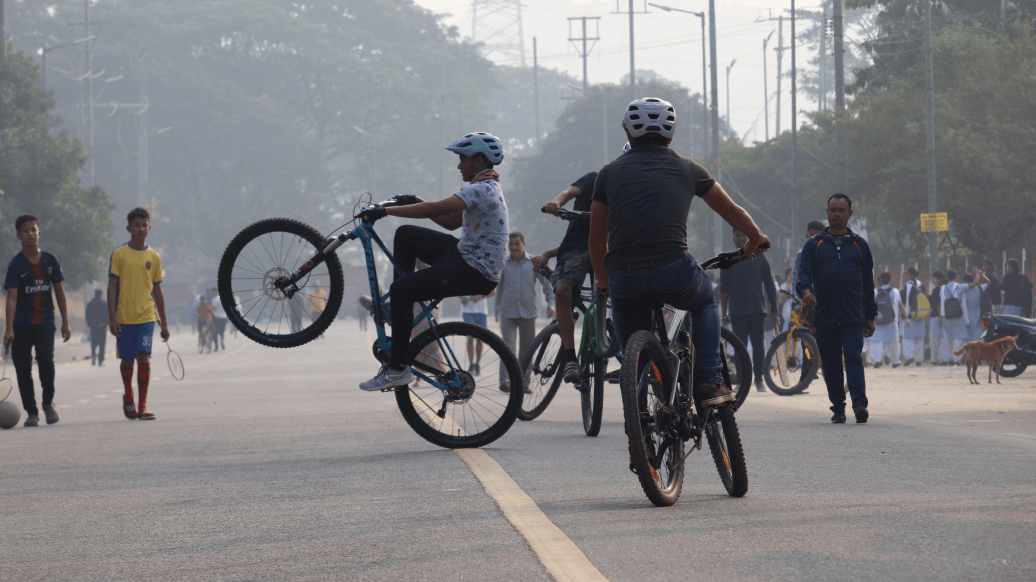
The eighth grader, still panting from his run, interrupted the ESAF researcher mid-interview. His mother — already deep into describing the difficulties of her daily commute — paused, looked down, and simply said, “It is not safe.”
She was not wrong. His school was just two kilometres away. But he took the bus. High-speed traffic, narrow lanes, unsafe crossings, and worsening air quality have turned a simple act of cycling to school into a risk-laden ordeal.
This was not an isolated account. ESAF Foundation’s walkability study, conducted in Nagpur in 2015–16, found that nearly 80% of surveyed pedestrians felt unsafe while walking on city roads. A follow-up study in Kochi in 2017 showed similar patterns: broken footpaths, poor lighting, and speeding traffic were pushing people off the pavement.
Meanwhile, the cycle is also slowly vanishing from everyday life. Not because it is outdated—but because there is no room left for it.
And yet, the benefits of cycling and walking are undeniable: cardiovascular health, mental well-being, affordable mobility, and a lighter footprint on the planet.
The question then is: Why did our cities stop making it possible?
The research team gauged public sentiment, yet by that point, ESAF had already been tracing the links between local anxieties and the broader national trajectory.
ST1
India’s Urban Crossroads
By 2031, nearly 600 million Indians—about 40% of the population—will live in cities. That number could reach 850 million by 2051 (Ministry of Urban Development, 2016). At the same time, India’s middle class is expanding—from 432 million in 2020 to an estimated 715 million by 2030. By 2047, it could exceed one billion (Business Standard, 2023).
With that growth comes mobility, and often, motorisation. If current trends hold, India could have over 562 million two-wheelers and 432 million cars by 2050—a dramatic rise shaped by income growth and global consumption curves (Singh, Mishra & Banerjee, 2020).
For many, a car offers more than transport. It offers security, from pollution, heat, and unreliable public systems. In a warming world, air-conditioning can feel like a necessity, not a luxury.
But something deeper drives this boom: status. In urban India, the car is a milestone. It signals success. Carpooling is often seen as a stepping stone, not a solution. And cycling? Either a compulsion, or a fitness trend.
ST2
Homegrown Pathways
In the Netherlands, children ride before they read, and even prime ministers commute by bike. Paris is converting hundreds of streets into car-free promenades. Bogotá’s Ciclovía turns 120 kilometres of roads into festivals of movement and community (World Economic Forum, 2024; DutchReview, 2024; DW, 2021).
These are not token gestures. They are cultural commitments that say: mobility is a shared right.
India’s cities, by contrast, are navigating a different landscape—one shaped by rapid urbanisation, structural inequality, and colonial-era systems. Responding to this complexity requires solutions that are not only ambitious but deeply rooted in local context, culture, and lived experience.
This is where civil society has a vital role to play.
Since 2013, ESAF Foundation has worked across nine cities, complementing government vision with grassroots insight, and ensuring that the journey forward leaves no one behind.
ST3
The Street as a Destination
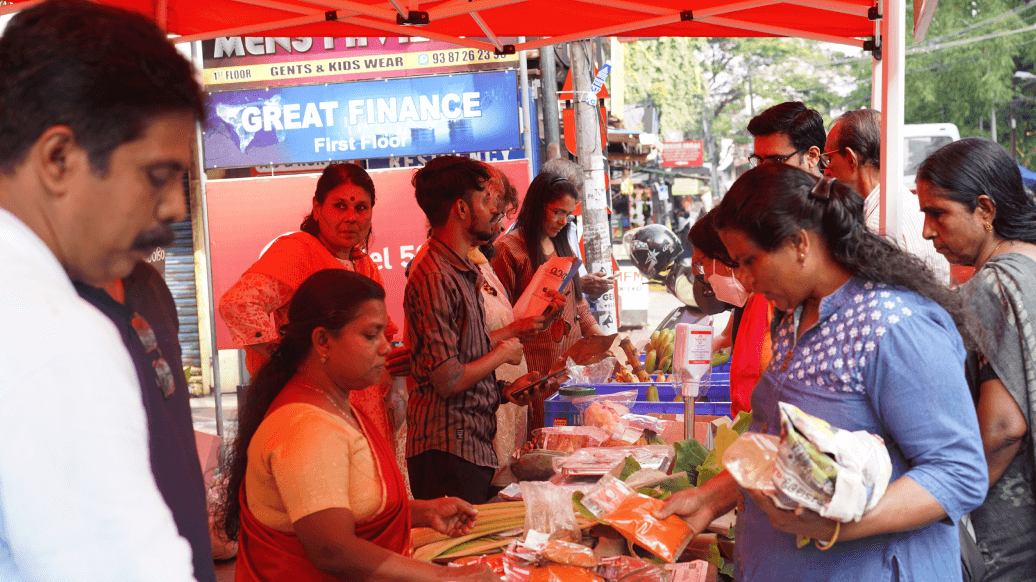
We share our streets with more than just vehicles. Vendors arrange their stalls. Children skip between kerbs. Handcart workers make their rounds. Dogs nap in the shade. Trees hush the noise and cool the air. These are not obstacles to traffic—they are the everyday pulse of the city.
And yet, many of them no longer feel welcome.
That is why ESAF Foundation has reimagined the street, not as a fast-moving corridor, but as a shared public ecosystem.
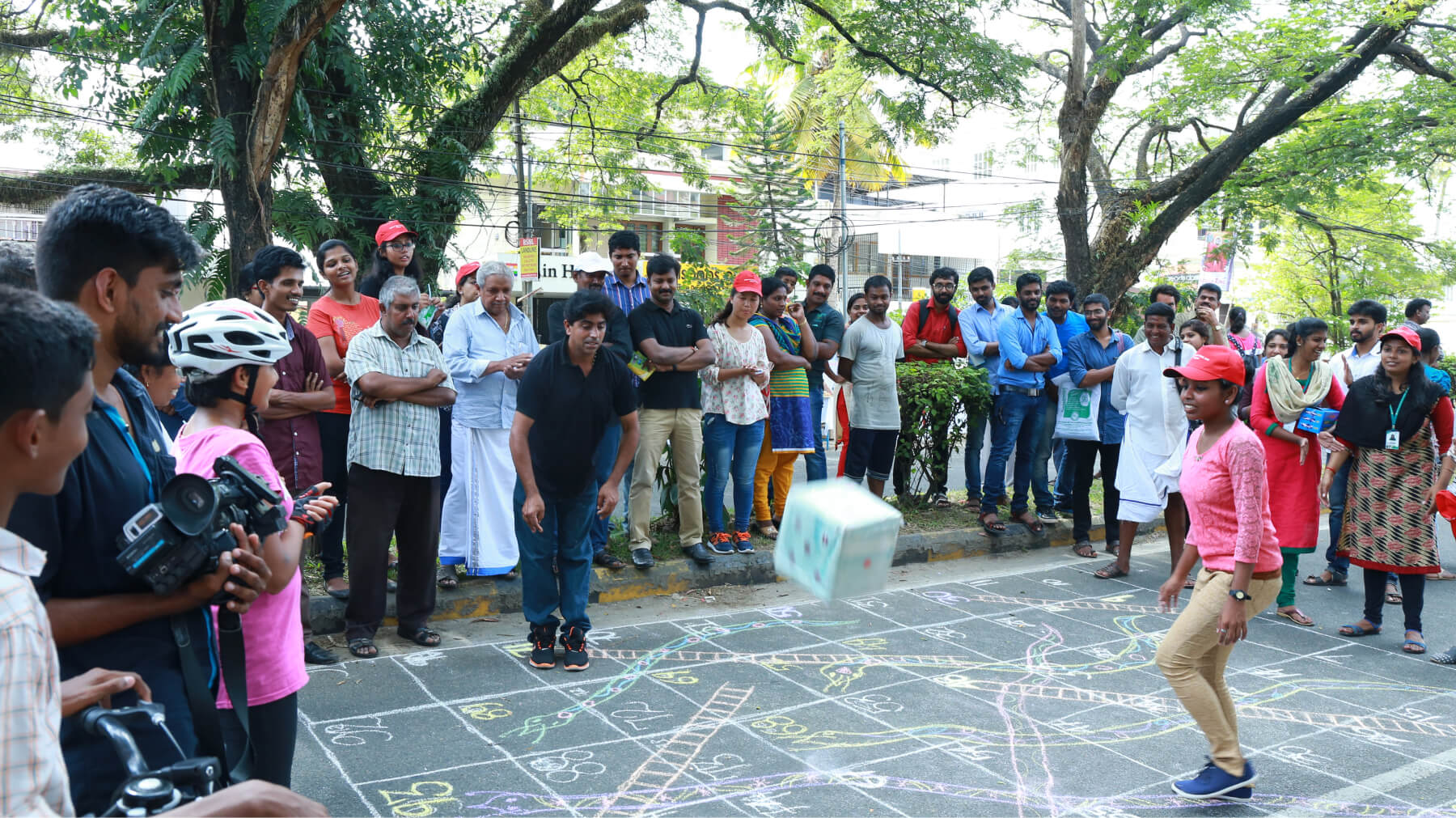
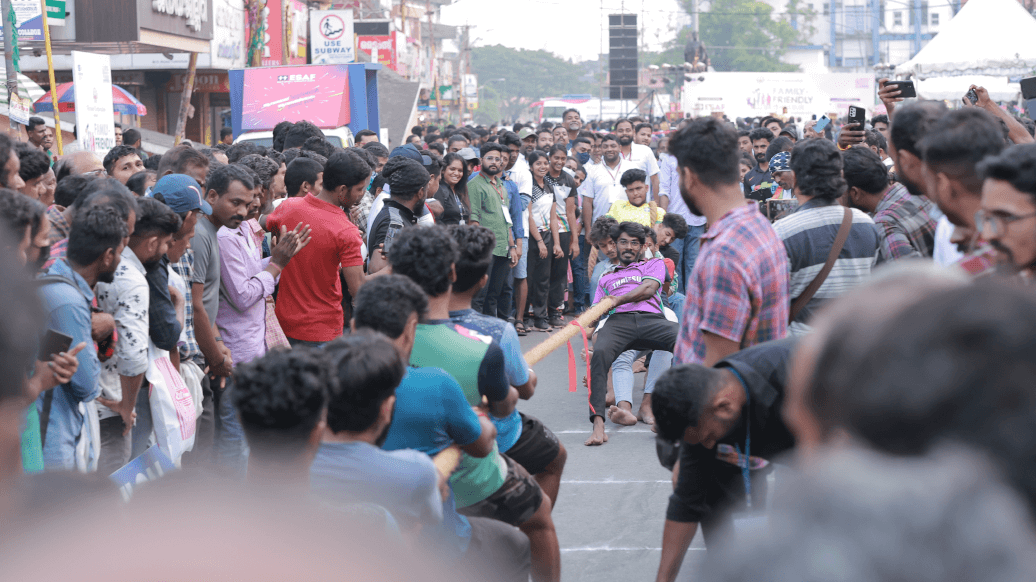
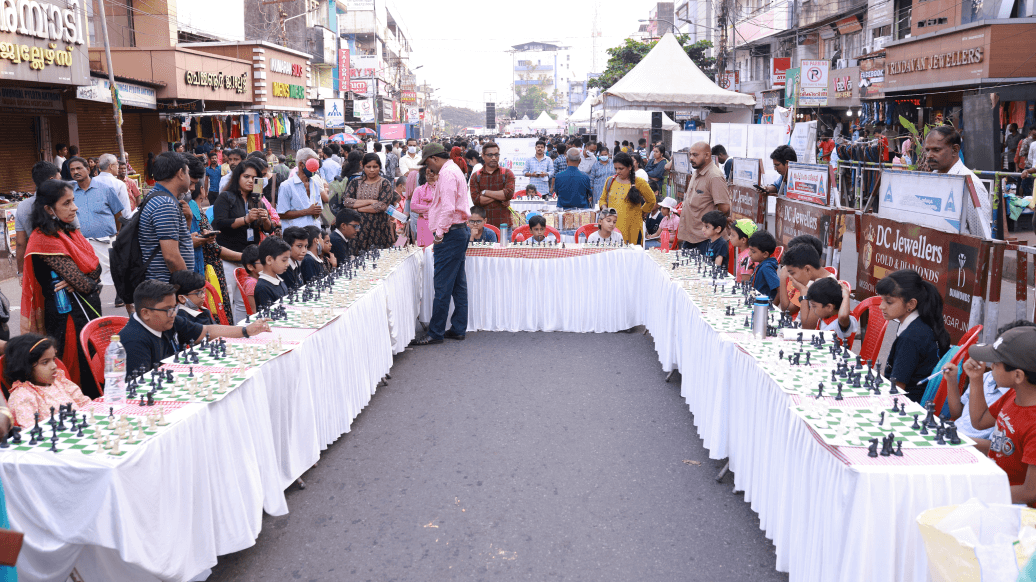
Since 2013, the organisation has conducted over 480 public mobility events—from Cycle Days and Open Streets to Freedom Heritage Rides and school-based programmes like Pedal Shaale. These are not one-off events. They are cultural nudges, shifting mindsets and reminding cities of whom they are built for.
The Foundation has also worked hand-in-hand with authorities to shape infrastructure from the ground up. In Bengaluru, ESAF Foundation contributed to the design of bi-directional cycle tracks and school safety zones under the SuMA programme. In Thrissur, its recommendations were adopted into the 2039 City Master Plan, embedding walkability, placemaking, and transit-oriented development. Two major streets were officially designated as vehicle-free zones. In Nagpur, its recommendations led to the development of three inclusive parks designed for children and adults with disabilities.
ST4
Festival of the Street
If you have ever stood at Thrissur Pooram, you know what a street can become. For one week each year, Thrissur’s roads are not closed—they are opened. Not to vehicles, but to life.
The city’s usually busy arteries slow to a halt, overflowing instead with elephants, balloon sellers, drummers, and Pulikkali dancers leaping to the beat of chenda melam—a traditional percussion ensemble. Parasols shimmer like hammered gold; the asphalt disappears beneath barefoot children and bursts of colour.
It is this ethos that ESAF Foundation channels into its work. In 2022, under the UNESCO Learning City banner, the Foundation organised Family-Friendly Thrissur, transforming the Municipal Office Road into a canvas of movement and music. No engines. No fumes. Just people reclaiming the rhythm of the street.
And beyond the festivals, that spirit endures. ESAF Foundation’s vision is not about spectacle—it is about everyday transformation.
ST5
Pavement to Policy
Street change begins with systems, but it lasts when shaped by people.
In a country rooted in decentralised governance, change begins not just in Parliament, but in panchayats, municipalities, and ward meetings. ESAF Foundation’s work builds on this belief: that inclusive cities emerge through collaboration between civil society and local governments.
In cities like Guwahati, Nagpur, Thrissur, and Bengaluru, ESAF Foundation has convened design consultations, stakeholder forums, and tactical pilots—embedding community voices in the very blueprint of the city. In Guwahati, ESAF’s policy work led to a budget allocation for developing five neighbourhood parks through the Metropolitan Development Authority.
What begins as dialogue becomes infrastructure: painted crossings, shaded benches, barrier-free sidewalks, and school-zone kerb extensions. The Foundation’s technical inputs also shaped public space upgrades under the AMRUT Mission across multiple cities.
Its Accessibility Handbook, now integrated into Kerala’s local governance training through Kerala Institute of Local Administration (KILA), is helping institutionalise inclusive design at the grassroots. City governments across seven Indian cities have adopted ESAF Foundation’s universal design principles to upgrade public spaces and beaches.
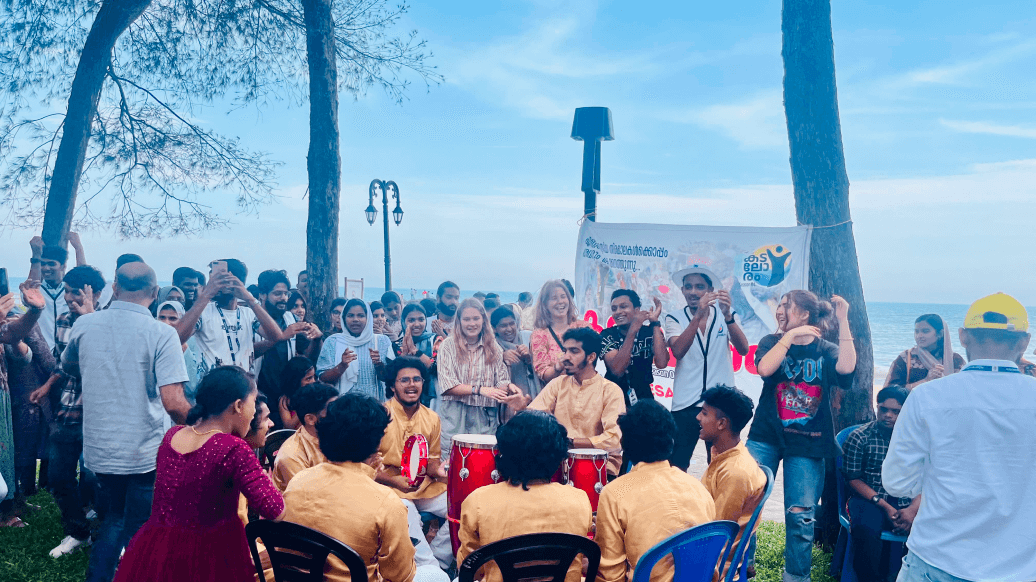
From shaping parking policy and neighbourhood plans to securing ₹2.5 crore for the Vakkad Inclusive Beach Project in Kerala’s 2024–25 budget, ESAF Foundation’s work translates policy into place. The Barrier-Free Tourism Project, implemented across 38 beach destinations in Kerala, was scaled using the Foundation’s design support. Between 2017 and 2024, ESAF organised 23 ‘Beach for All’ campaigns in collaboration with local and state governments.
And global platforms have taken note — from the UN SDG Voluntary Registry and ARUP’s It’s Alive to the UNWTO’s Accessible Tourism commendation.
ESAF Foundation has also represented India at international forums including the Ecocity Forum and the International Public Markets Conference in London.
The turn away from speed has surely begun.
But the destination is still many crossings away.
To learn more or get involved, explore:
-
Building Resilient Communities by Opening the Streets of Indian Cities (2024)
-
Livable Cities Annual Summary Report (2023–24)
-
Walkability Study Kochi (2017)
-
Walkability and Pedestrian Facilities in Nagpur (2015–2016)