ESAF Foundation Communications
31 May 2025
FEATURE
Inclusion Is the First Step Towards Health
ESAF Foundation Communications
31 May 2025
ESAF Foundation’s work on accessible beaches in Kerala has improved physical access, participation, and visibility for people with disabilities. This piece outlines how simple, well-placed interventions can influence public infrastructure, policy, and everyday inclusion.
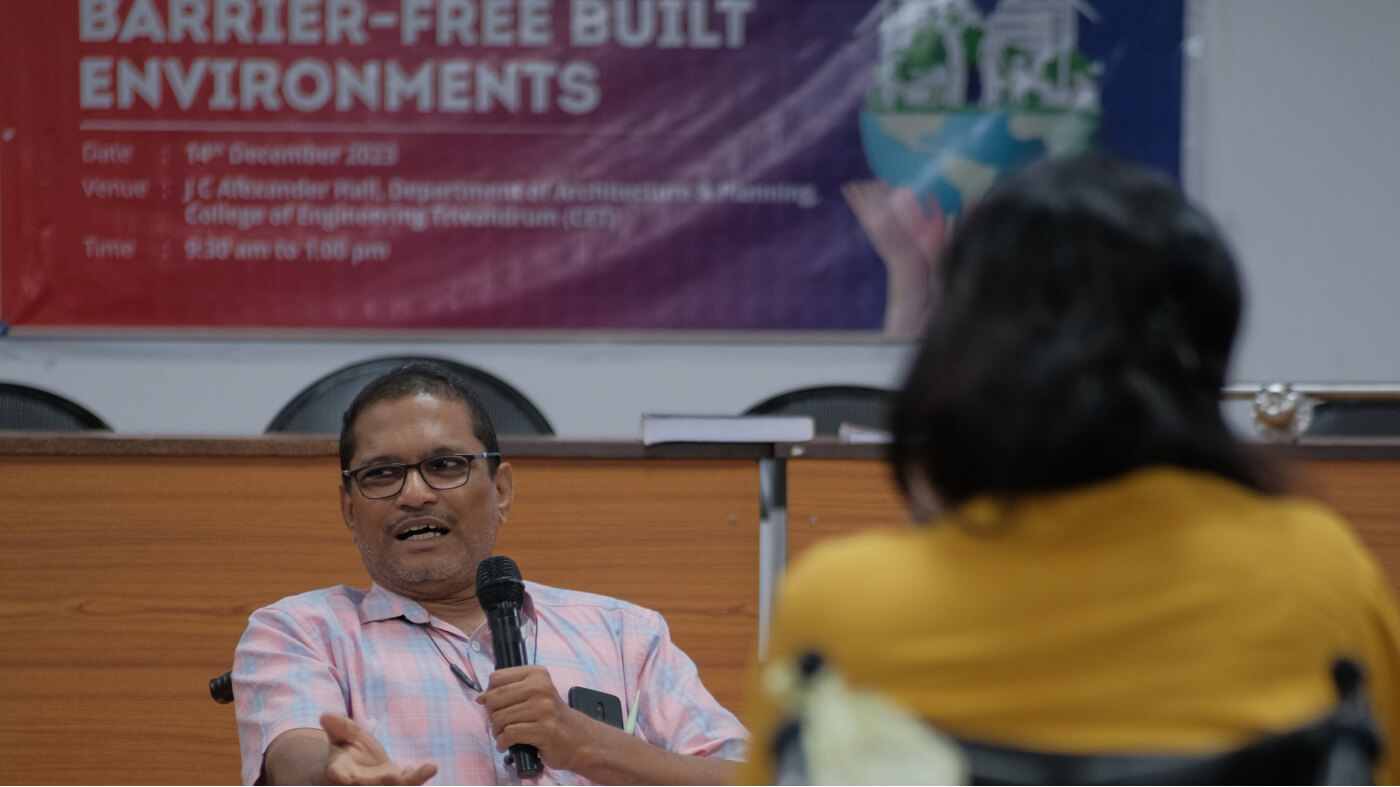
Amina dreamt with her eyes closed.
In her dream, the waves at Kappad beach were playful. They rushed up the shore, tugging gently at her ankles. The sun was warm, the sand forgiving, and the laughter of other children wrapped around her like a melody. She was in it—splashing, scooping shells, letting the salty spray kiss her face.
But when Amina opened her eyes, the dream slipped away. She was still in her wheelchair, just a few metres from the start of the beach in Kozhikode. The concrete path stopped abruptly. There was no ramp. No railing. No way forward. Her brother offered to carry her. She shook her head.
She simply looked out at the water—longing not to conquer it, but to meet it on her own terms.
B1
Designing for Dignity
Amina’s experience is not unusual—but it is revealing. Across India, the design of public spaces often leads to exclusion. Accessible beaches are not just a matter of engineering. They are a test of imagination—of who we expect to be present in public life, and who we quietly leave out.
India has over 7,500 kilometres of coastline. But until recently, very few beaches across the country had ramps, handrails, or wheelchair-accessible walkways. This in a country where more than 26.8 million people live with disabilities (Census of India, 2011). And the numbers are rising. By 2050, India’s elderly population is expected to reach 323 million, and long-term conditions like heart disease and joint problems—now leading causes of disability—are becoming more common (Pattnaik et al., 2023). Physical access, therefore, is not a side concern. It is central to dignity, participation, and wellbeing.
Although India ratified the UN Convention on the Rights of Persons with Disabilities (CRPD) in 2007, which mandates equal access to recreational spaces, implementation has lagged. ESAF’s work is among the rare few that moves this commitment from aspiration to reality.
The Right to Joy, Not Just Survival
When we speak of urban inclusion, we often focus on housing, sanitation, education, or transport. But ESAF’s initiative raises a vital question: What about access to joy, to rest, to nature?
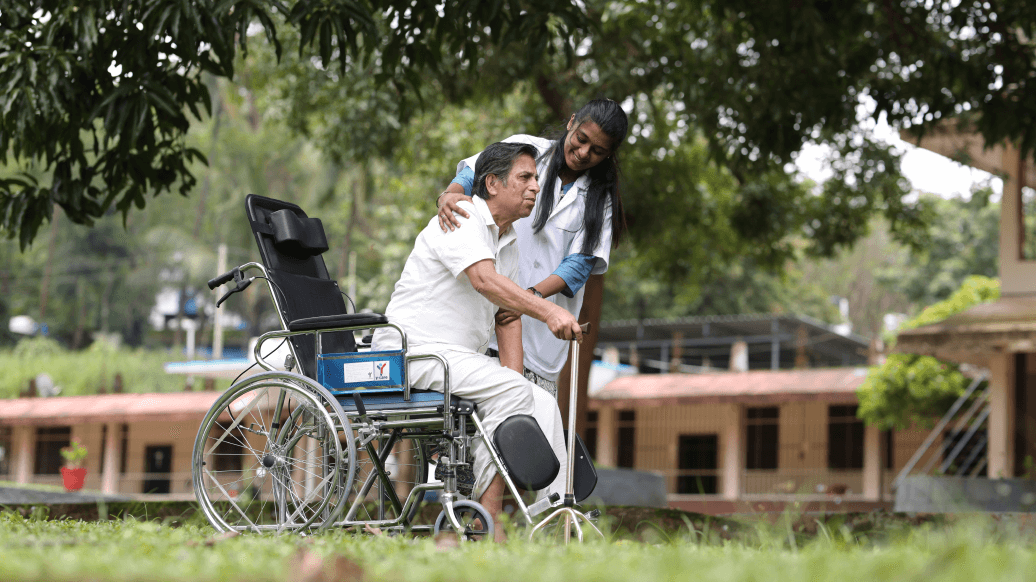
Nature-rich settings like beaches offer measurable health benefits. Exposure to outdoor environments improves mood, lowers stress hormones, enhances mobility, and builds emotional resilience. For people with disabilities—who face higher rates of isolation, anxiety, and chronic illness—these spaces are not luxuries. They are therapeutic.
Research shows that accessible nature-based activities can improve flexibility, reduce secondary health risks, and foster social connection and agency (Bulger, 2023). Even short-term inclusive events boost confidence and wellbeing.
These benefits span the full spectrum of healthcare: promoting wellness, preventing decline, and in many cases, supporting recovery. For someone living with depression or chronic pain, access to an open, welcoming public space can be as vital as any prescription.
This is not about aesthetics. It is about public health—embedded not in hospitals, but in the everyday design of our cities.
B2
ESAF’s Model: From Participation to Policy
Kerala’s 590-kilometre coastline—dense with life, commerce, and culture—has long been celebrated for its beauty and openness. Yet despite the state’s reputation for progressive policy, much of its shore remained inaccessible to people with mobility challenges.
ESAF’s “Beach for All” campaign, launched in 2015, emerged in response to this gap. It began with a situation analysis of 25 beaches across Kerala, showing how simple, well-planned interventions could make these spaces inclusive—without compromising their natural beauty or function. These early findings laid the foundation for what would become a quietly transformative shift.
Today, in districts like Kozhikode and Malappuram, the sight of a floating beach wheelchair is no longer rare. Paraplegic youth now touch the Arabian Sea for the first time. Elderly visitors can take in the horizon without obstruction. Children with autism play freely in sensory-friendly zones designed for comfort and safety.
This change was not built on infrastructure alone. ESAF’s approach placed people at the centre. Local disability rights groups co-designed beach pathways and amenities, ensuring each feature reflected lived experience. Governance was collaborative, drawing in municipal bodies, tourism departments, and social welfare offices. And perhaps most importantly, the shift extended to attitudes. Vendors, lifeguards, and sanitation workers were not only trained—they were sensitised. Inclusion began not just with ramps, but with a mindset.
The model has since shaped Kerala’s broader tourism policy and now offers a practical, scalable blueprint for inclusive urban design—adaptable to parks, riverbanks, marketplaces, and transit hubs across India.
The Economics of Belonging
Accessibility is too often seen as an optional expense—something to be justified, postponed, or tacked on later. ESAF’s work challenges that assumption. It shows that inclusion is not a burden but a catalyst for health, livelihoods, and growth.
Globally, over 1.3 billion people—around 16% of the population—live with significant disabilities. Nearly half of them are over the age of 60. In wealthier nations, two-thirds of people with disabilities have the means to travel, often accompanied by family or caregivers, amplifying their impact on the tourism economy (World Tourism Organization, n.d.; Bowtell, 2015). This isn’t just a question of rights. It’s a major economic opportunity.
In India, that opportunity is layered and local. Kerala’s tourism sector contributes around 12% to the state’s GDP—and continues to grow. While international tourism garners visibility, it is millions of domestic and interstate travellers who provide year-round momentum, sustaining small businesses and informal workers across the hospitality chain.
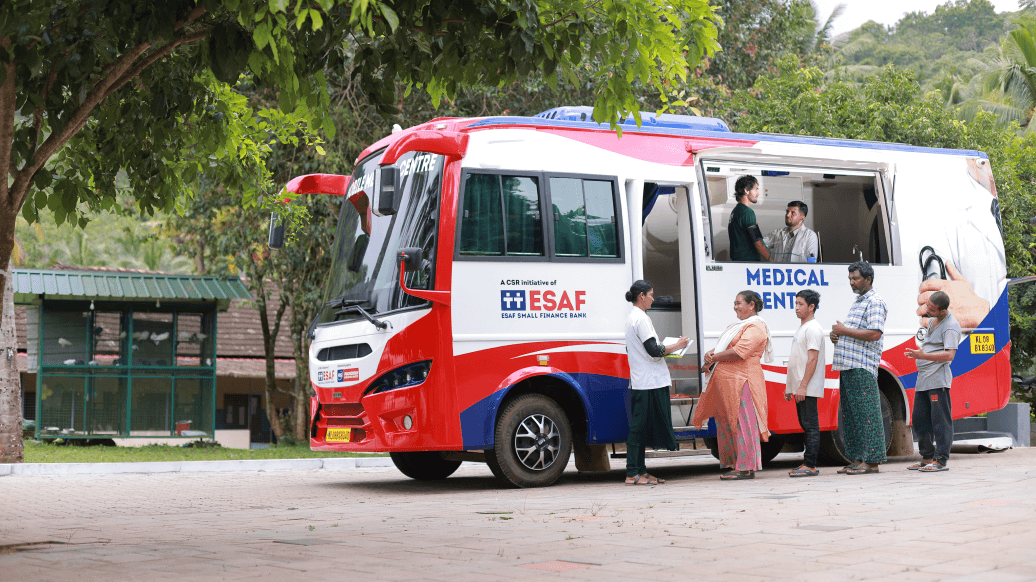
It is in this context that ESAF’s early interventions take on particular significance. That groundwork helped sensitise policymakers, and by 2019, the Government of Kerala had launched its Barrier-Free Tourism Project, which has since made nearly 100 sites accessible. The state earned global recognition, including a special mention at the UNWTO’s Accessible Destination Awards (Times Travel Editor, 2020; Kerala Tourism, 2023).
ESAF’s accessible beach campaign has both contributed to and extended this momentum, bringing inclusion all the way to the shoreline. By making coastal spaces navigable, it unlocks new avenues for livelihood.
Small businesses, self-help groups, and local entrepreneurs can now run inclusive cafés, offer adaptive tours, and welcome a wider, more diverse range of travellers.
This is not just about infrastructure. It is about building economic models that begin with belonging. Because when design invites everyone in, prosperity does not trickle down—it rises from within.
B3
A Shoreline Reimagined
That day remains, caught in a photograph.
Amina at the edge of the sea, no barriers in her way. She had rolled forward on her own, down the smooth path, volunteers beside her more for company than support. At the shoreline, they had lifted her gently into a floating beach wheelchair.
She let her feet rest in the water. A wave came. It met her quietly.
And she smiled—not from wonder, but from something even softer. As though the shoreline had waited for her too.
To explore further, read the full publication:
Creating Accessible Beaches in Kerala (2023)
Handbook for Constructing Accessible and Barrier-free Infrastructure in Public Spaces, Leisure Zones, and Tourism Destinations (2021).
Situational Analysis of Beaches in Kerala (2015-2016)
References
-
Bowtell, J. (2015). Assessing the value and market attractiveness of the accessible tourism industry in Europe: A focus on major travel and leisure companies. Journal of Tourism Futures, 1(3), 203–222. https://doi.org/10.1108/JTF-03-2015-0012
-
Bulger, G. (2023). Health benefits of outdoors: Physical and mental health benefits of access to outdoor recreation and nature for people with disabilities. Center for Urban Policy Research, Rutgers University. Retrieved from https://cupr.rutgers.edu/wp-content/uploads/2023/08/Health-Benefits-of-Outdoors-White-Paper.pdf
-
Challis, D., Tucker, S., Wilberforce, M., Brand, C., Abendstern, M., Stewart, K., … & Bowns, I. (2014). The balance of care approach to health and social care planning: a systematic review of the literature. National trends and local delivery in old age mental health services: towards an evidence base. A mixed-methodology study of the balance of care approach, community mental health teams and specialist mental health outreach to care homes. https://www.ncbi.nlm.nih.gov/books/NBK373958/
-
Census of India. (2011).Disabled population by type of disability, age and sex https://www.data.gov.in/catalog/disabled-population-type-disability-age-and-sex-census-2011-india-and-states
-
Kerala Tourism (December , 2023). Kerala Tourism Master Plan ‘Mission 2030’ to be Launched in 2024. https://www.keralatourism.org/newsletter/news/2023/mission-2023-kerala-tourism/2190
-
Pattnaik, S., Murmu, J., Agrawal, R., Rehman, T., Kanungo, S., & Pati, S. (2023). Prevalence, pattern and determinants of disabilities in India: Insights from NFHS-5 (2019–21).Frontiers in Public Health, 11, Article 1036499. https://doi.org/10.3389/fpubh.2023.1036499
-
Times Travel Editor. (2020, January 24). Kerala Tourism earns a special mention by UNWTO for its Barrier-Free Tourism Project, Times of India. Retrieved from https://timesofindia.indiatimes.com/travel/destinations/kerala-tourism-earns-a-special-mention-by-unwto-for-its-barrier-free-tourism-project/articleshow/73584166.cms
-
World Tourism Organization (UNWTO). (n.d.). Accessible tourism. Retrieved May 8, 2025, from https://www.unwto.org/accessibility