ESAF Foundation Communications
9 June 2025
FEATURE
What Happens When Children Are Trusted with Responsibility
ESAF Foundation Communications
9 June 2025
In villages across South India, ESAF Foundation’s Balajyothi programme helps children build confidence, empathy, and voice. Through clubs, workshops, and creative spaces, young minds are learning to lead, collaborate, and participate meaningfully.
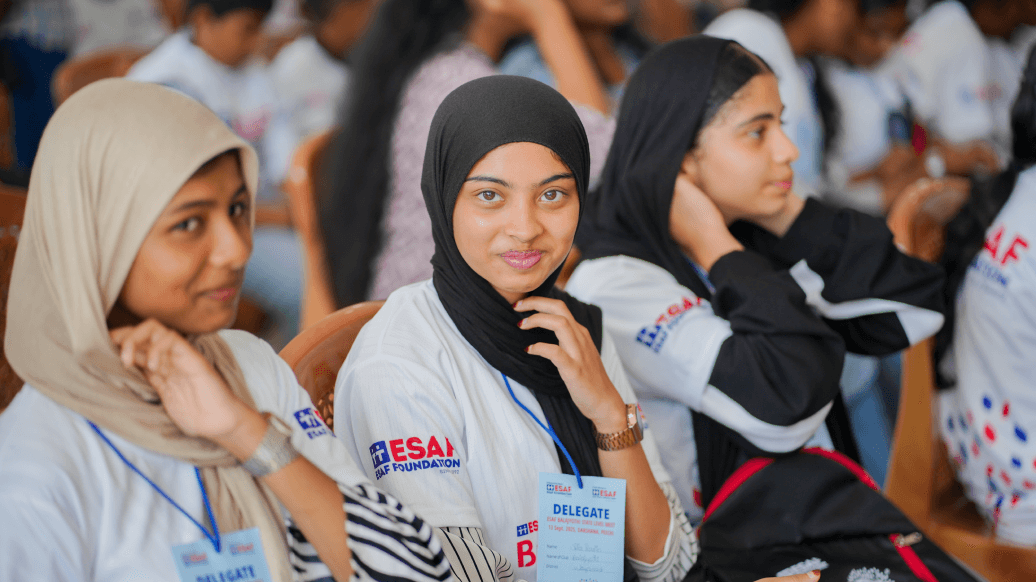
In a village schoolyard shaded by tamarind trees, barefoot children gather in small clusters. One group sketches posters about gender equality. Another practises football drills. Tucked beneath a neem tree, three children are deep in debate about whether the tiger in their picture book was a hero or a villain.
Among them is Divya.
She is thirteen, from a tribal hamlet near Thrissur. When she first stepped into her local Balajyothi Club, she hardly looked up from her schoolbag. By her third session, she was reading aloud from a Tamil folktale. By her sixth, she was leading a discussion on savings. Now, she moderates her club’s weekly meetings and tells anyone who asks, “I want to be a teacher.”
This is ESAF Balajyothi. Not a syllabus. A spark.
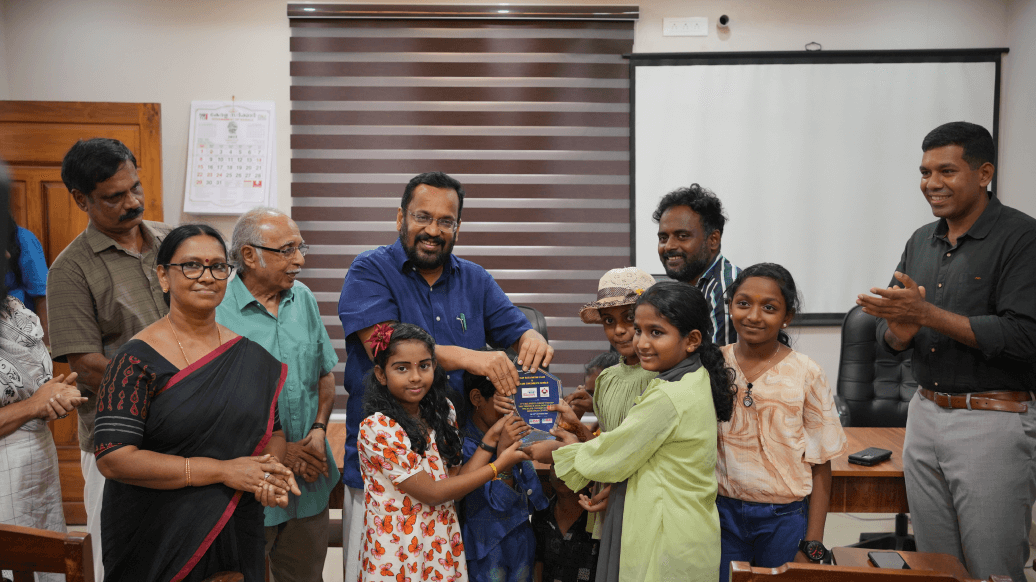
The Beginning, Bright and Bold
Launched under the CSR initiative of ESAF Small Finance Bank, ESAF Balajyothi is not a conventional programme. It is a living rhythm. A rhythm of barefoot debates, recycled art, street plays, and surprise speeches in village squares.
Its reach: rural children aged six to eighteen.Its approach: child-led, community-anchored, joy-infused.Its purpose: not merely to educate, but to empower mind, body, and spirit.
In communities where opportunity is uneven and encouragement rare, Balajyothi builds scaffolding for strength. Children’s clubs. Life-skills workshops. Sports coaching. Micro-libraries. Spaces where confidence is not given, but grown.
This movement did not emerge in isolation. It was built on years of groundwork.
In 2016, ESAF Foundation launched the Kaval Project—India’s first psychosocial rehabilitation programme for children in conflict with the law. Spread across Kerala, it focused on counselling, reintegration, and community support.
Later came the Community Transformation Hubs, supported by YES Bank. Evening learning centres turned into weekend creative clubs. The first murals were painted. The first speeches were delivered. Those clubs were seeds. Balajyothi is the blossom.
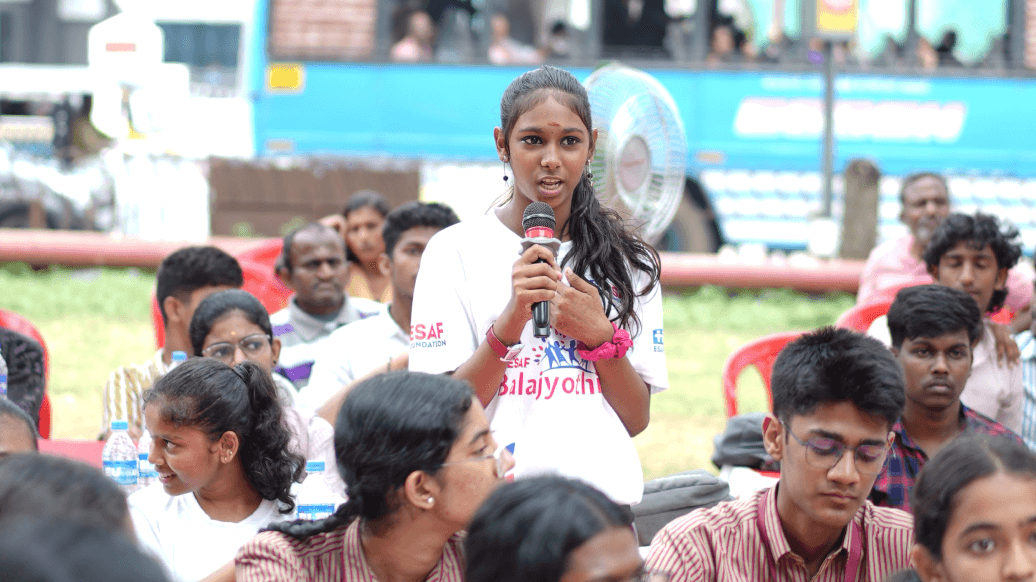
What Balajyothi Builds
334 clubs. 10,335 children. Two states. One vision.
Each club is a small republic. One week, children are staging a puppet show on clean water. Next, they are crafting posters about plastic pollution. They create, argue, reflect. Every meeting is a rehearsal for democracy.
In twelve clusters, ESAF has formed inclusive clubs for 290 differently-abled children. But labels are left at the door. Here, footballs fly, brushes dance, and stories unfold in movement and colour. A child need not speak to be understood.
And somewhere between silence and speeches, leadership begins.
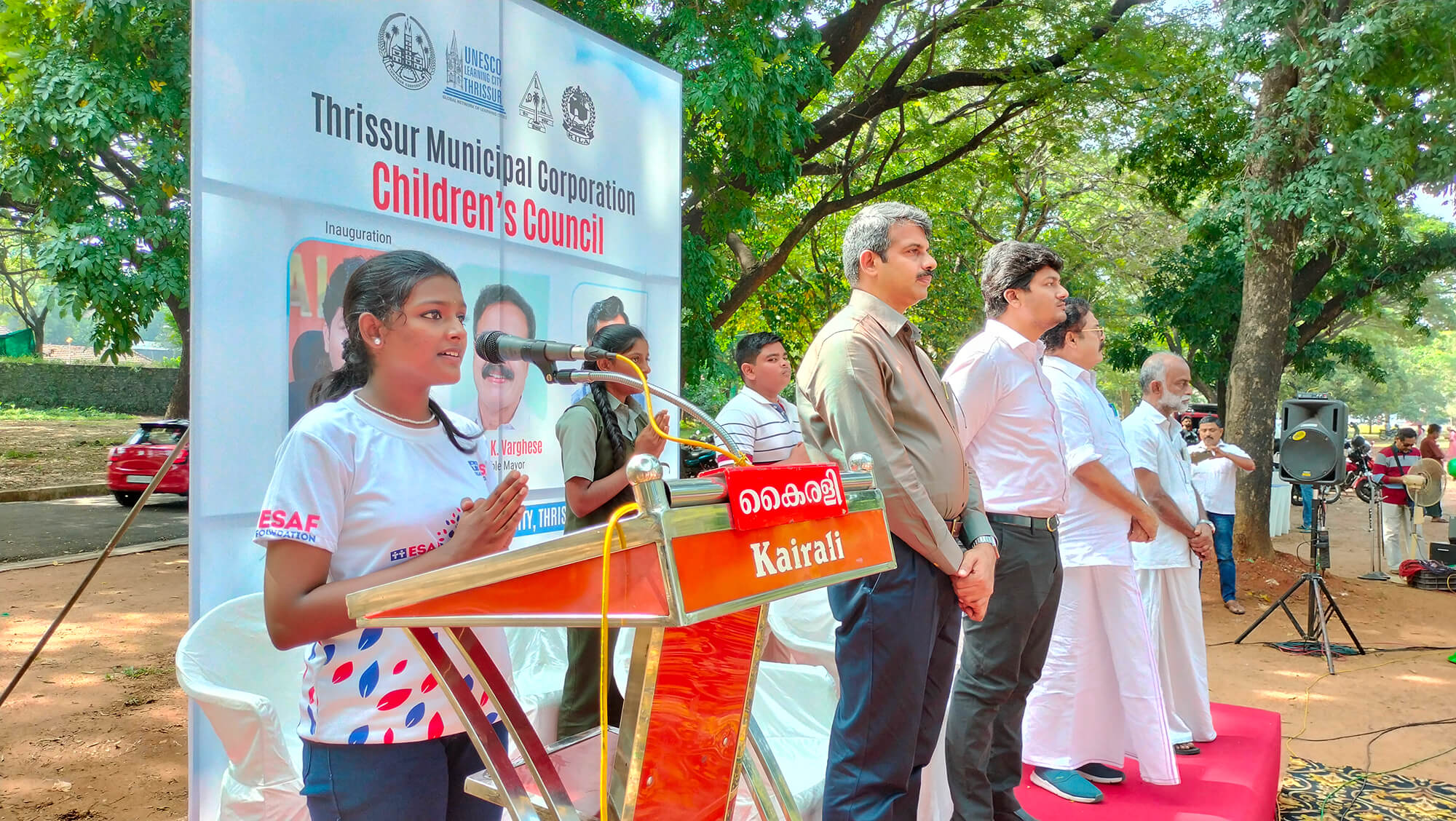
Through seventy-seven workshops, more than 7,300 children have gained experience in public speaking, creative expression, and collaborative planning. The quietest boy in the room becomes the one who opens the Independence Day programme. The softest-spoken girl becomes a workshop facilitator in her own right.
Ask any of the 375 children who have trained under professional football coaches. Their jerseys may be hand-me-downs, but the dreams inside them are brand new. From muddy fields to structured drills, these children are learning not only to play, but to persist.
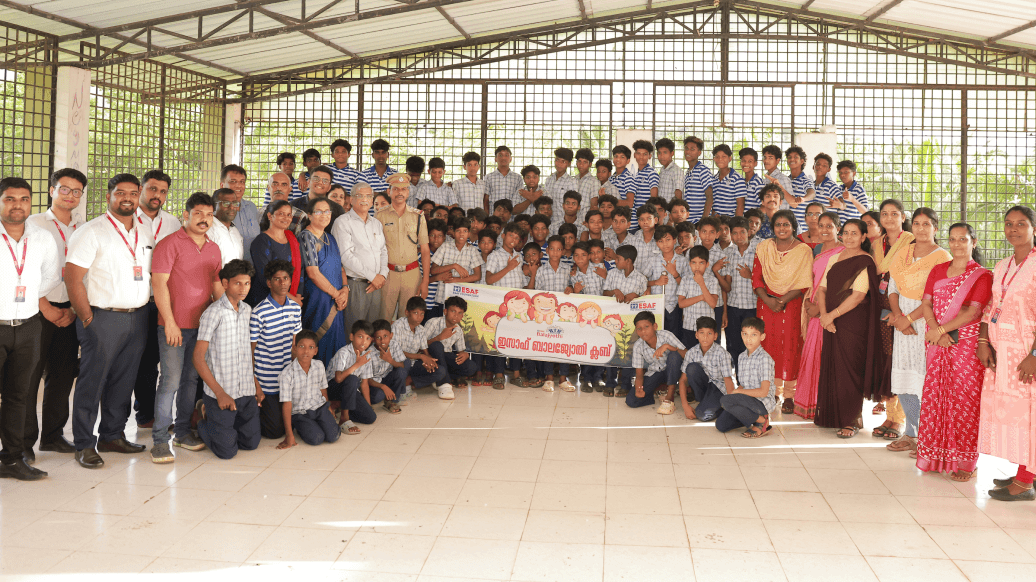
Pages, Playfields, and Civic Practice
Responsibility is not a lesson at Balajyothi. It is a practice.
On World Environment Day, 7,200 children rolled up their sleeves. They planted 3,002 saplings. Cleared 300 sacks of plastic waste. Created piggy-bank clubs to learn about saving. In one village, children wrote a petition asking for dustbins at the bus stand. The local council agreed.
Elsewhere, the work is quieter, but no less powerful.
Fifteen children’s libraries now serve over 2,279 readers. No fanfare. Just pages turning. When ten-year-old Manu checked out a picture book about trains, he spent the next week designing a railway map for his village—“If we had one,” he explained, “it should stop here, by the mango tree.”
That spark does not appear by accident. It is fuelled by rhythm—weekly sessions, monthly reflections, and seasonal observances turned into civic classrooms. On Gandhi Jayanti, children act out skits on non-violence. On Teachers’ Day, they run the entire show.
These children are not visitors to the process. They are its designers.
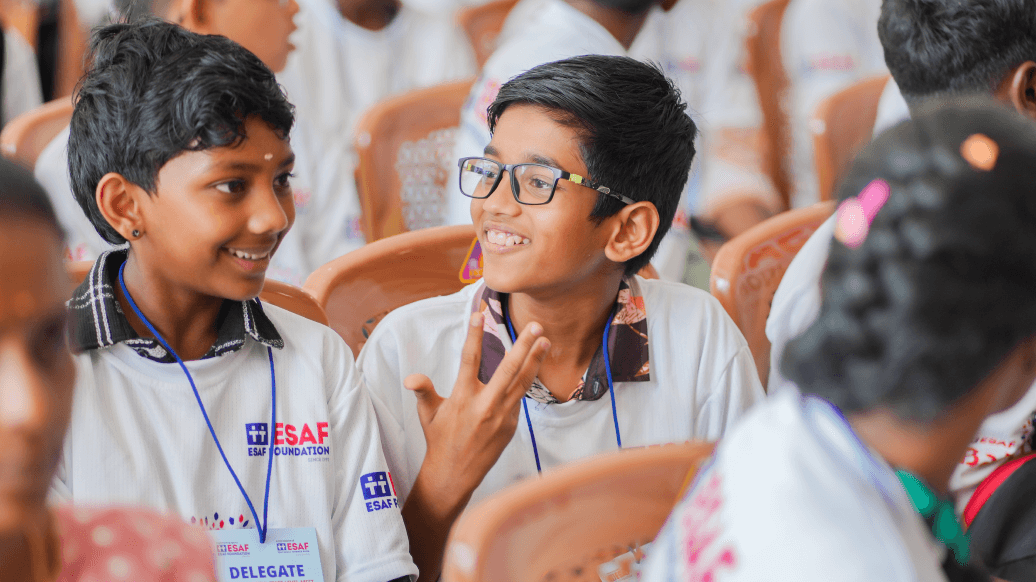
Powered by Community
Behind every confident child is someone who believes in them.
At Balajyothi, it is the facilitators who hold the torch. Often young people from the same communities, trained through ESAF Foundation’s partnerships with local colleges, are guides, mirrors, and mentors.
To support them, ESAF Foundation has signed agreements with academic institutions, bringing in volunteers to strengthen the work. These facilitators ensure that learning does not end with the club meeting. It spills over into kitchens, courtyards, and village crossroads.
During ESAF Foundation’s summer camps, children map emotions, play empathy games, and design solutions for problems they see around them. Through the Shramjyothi initiative, 895 children visited old-age homes, cleaned village paths, and collected books for peers who lacked them.
These acts are not framed as charity, but as early exercises in community service, civic responsibility and mutual support.
The Light That Travels
The word Balajyothi means “light of the child.” But it is more than a name.
It is the glow in a girl’s stride as she runs towards the football. It is the brightness in a boy’s eyes as he explains his science project to his grandmother. It is the warmth in a parent’s smile when their daughter stands up in public and speaks.
Balajyothi is not a stand-alone chapter. It is part of a longer story—a story of rural resilience, of child-led change, of futures made stronger through structured nurture.
As the ESAF Foundation continues to invest in children’s emotional literacy, creative expression, and critical thinking, the message is clear: the child is not the future of tomorrow—they are the leaders of now.
The programme will continue to evolve through better resource hubs, deeper school partnerships, expanded facilitator training, and cross-learning between clubs. And it will continue to listen, to the quiet child, the curious one, the special one, the one who surprises you.